Effective Mind Maps
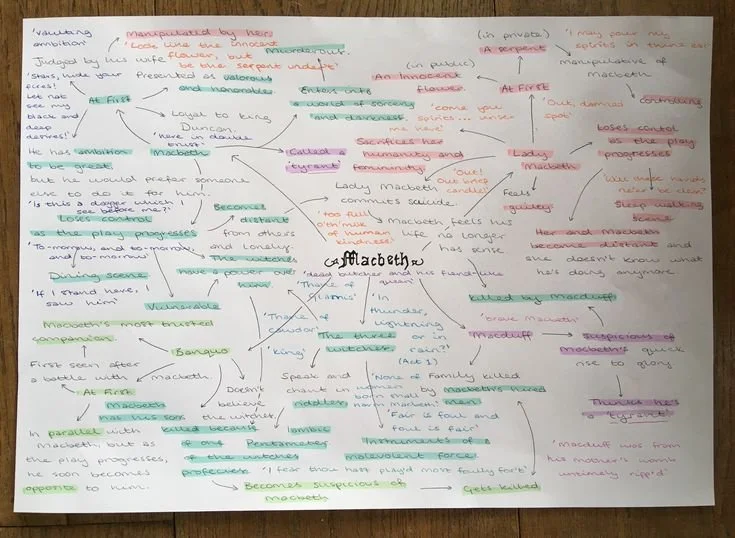
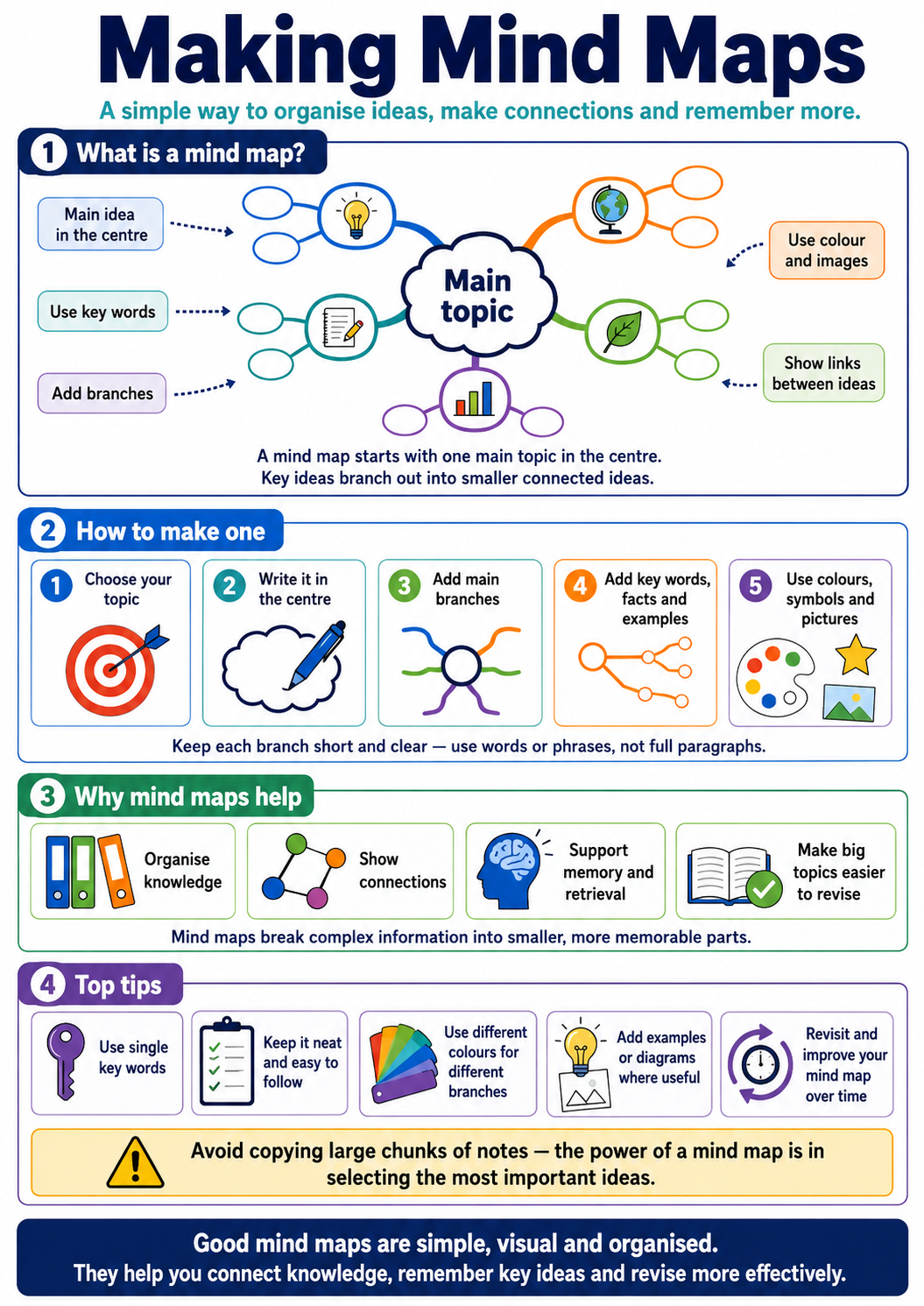
Mind maps are a powerful revision tool because they help students organise information visually. Instead of writing long pages of notes, a mind map starts with one main topic in the centre and then branches out into key ideas, facts, examples, vocabulary and links. This helps students see both the bigger picture and the smaller details.
Effective mind maps work because they make students think carefully about what matters most. To create a good mind map, students have to select key words, group related ideas and decide how information connects. This makes revision more active than simply copying or rereading notes.
Mind maps are especially useful for complex topics because they break information into smaller, more manageable parts. Colours, symbols, images and diagrams can also help make ideas more memorable. When students revisit their mind maps over time, they strengthen their understanding and are more likely to remember important knowledge in tests and exams.
A good mind map should be clear, simple and organised. It should use short phrases rather than full paragraphs, include the most important knowledge, and show links between ideas. Used well, mind maps help students connect knowledge, improve recall and build confidence before assessments.